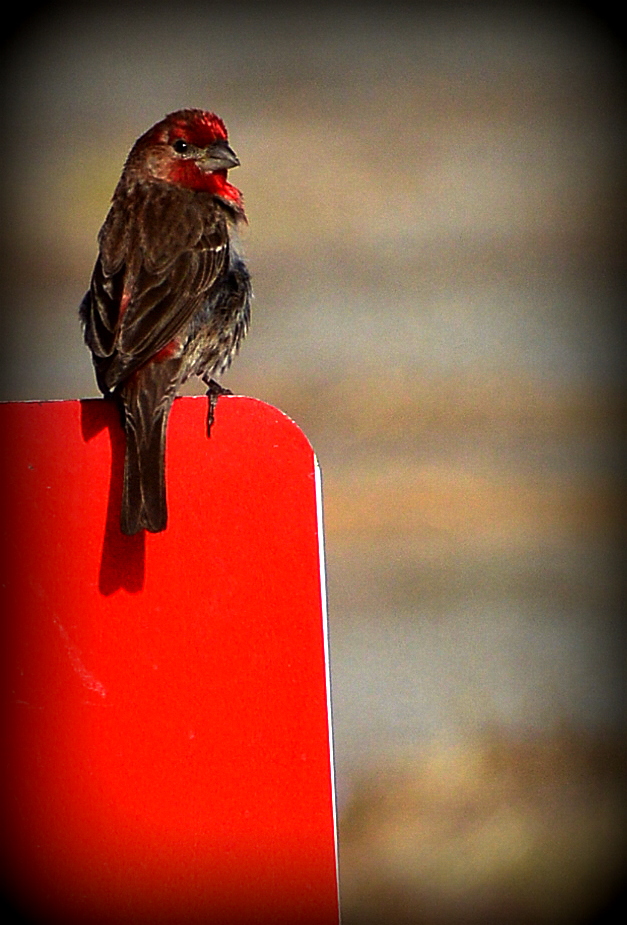
This raven caught me off guard, I was not expecting him to get as close to my truck as he did but he just keep walking closer and closer, until he was probably a good ten to fifteen feet away. It was only after I had stopped taking photos, got the abatement pistol out, and fired a couple of blank starter caps that he and the adult with him (in the distance) took off. Later on, while reviewing the photos after work, I realized he must have been a young adolescent bird due to "patchwork" feathers and his atypically unwary behavior -- none the less it was a rather cool encounter!
 |
| Common Raven (Corvus corax) |


The next unexpectedly awesome encounter was not just one Peregrine Falcon, but two! I had stopped to check on the progress of an L.A. County Public Works crew that was cleaning out basin of a flood control channel that runs adjacent to airport property and when not cleaned out often enough has provided attractive habitat -- that's a story for another post. Anyways I had stopped to see the progress and as I was glancing over to them something darts past my peripheral field of view -- a Peregrine Falcon! So I quick reached down, grabbed the camera, and snapped off a quick few shots as it passed. Then I heard something -- something like a repeated cry of a raptor. So scanned the area and saw bird sitting on a light pole near the UPS ramp, but even with binos I couldn't be certain of what it was so drove over to investigate. So as in many case I start snapping photos as I approach, figuring the bird will scoot before I can get decently close, but this time I was able to get close -- in fact I got called away on business before I could fully push the limit. All that aside it was super awesome to be able witness and get photos of not just one, but two truly amazing birds! If you look close enough you'll see it's got bands on both legs; I am still examining the photos to try and figure out who's banded it.
 |
| Peregrine Falcon (Falco peregrinus) |